
Industrial Wastewater Recycling: How Filter Presses Support Water Reuse
Industrial facilities can generate large volumes of wastewater containing suspended solids, sludge, minerals, chemicals, or process residues. Treating this water only for disposal can increase water consumption, sludge volume, and operating costs.
Industrial wastewater recycling offers another approach. By separating solids from liquids and treating the recovered water to the required quality, manufacturers can reuse part of their process water while reducing the amount of waste requiring disposal.
A filter press is commonly used as a mechanical dewatering step in this process because it can efficiently separate wastewater sludge into a concentrated filter cake and a liquid filtrate stream.
Why Recycle Industrial Wastewater?
Industrial water use can represent a significant operating requirement in mining, chemicals, metal processing, ceramics, food production, stone processing, and many other industries.
Recycling suitable wastewater can help reduce the amount of fresh water entering the plant and decrease the amount of wastewater leaving it.
Depending on the process and treatment system, recycled water may be reused for washing, cooling, slurry preparation, equipment cleaning, dust control, or other applications where the required water quality can be achieved.
Where Does a Filter Press Fit into a Wastewater Recycling System?
A typical industrial wastewater treatment process generates sludge after suspended solids and contaminants are concentrated or precipitated from the water.
This sludge still contains a large amount of liquid. A filter press for wastewater treatment removes much of this liquid through pressure filtration.
During operation, sludge is pumped into chambers formed between the filter plates. Liquid passes through the filter cloth and exits as filtrate, while solids remain inside the chambers and gradually form a filter cake.
After filtration, the system produces two separate streams:
- Filter cake: concentrated solids with reduced moisture and volume.
- Filtrate: separated liquid that can be discharged, further treated, or reused depending on its quality.
Benefits of Using a Filter Press for Wastewater Recycling
Reduce Sludge Volume
Untreated or partially treated sludge can contain a high percentage of water. Transporting and disposing of this material means paying to handle both solids and excess liquid.
Filter press dewatering reduces sludge moisture and produces a more compact filter cake, making downstream handling, transportation, storage, or disposal easier.
Recover More Process Water
The liquid removed during dewatering becomes a separate filtrate stream rather than remaining trapped in the sludge.
When the filtrate meets process requirements—or after additional treatment—it may be returned to suitable parts of the production process. This can reduce dependence on fresh water.
Reduce Waste Handling Costs
Lower sludge volume can reduce the number of loads required for transportation and disposal.
For facilities generating large quantities of sludge, improving dewatering efficiency can have a significant effect on total wastewater management costs.
Improve Solid-Liquid Separation
Pressure filtration provides controlled separation of suspended solids from liquid. Filter cloth, filtration pressure, plate design, slurry characteristics, and cycle settings can all be selected according to the material being processed.
This makes filter presses suitable for a wide range of industrial wastewater streams.
Support Resource Recovery
In some industries, the solids separated from wastewater may still contain materials with potential value.
Effective dewatering can make these solids easier to recover, transport, reuse, or send to another treatment process instead of handling them as a high-moisture slurry.
Industries That Can Use Wastewater Recycling
Filter press dewatering and water recycling can be applied in many industries, including:
- Mining and mineral processing
- Chemical manufacturing
- Metal finishing and electroplating
- Ceramic and kaolin processing
- Stone cutting and polishing
- Printing and dyeing
- Food and beverage processing
- Industrial wastewater treatment plants
The treatment process varies depending on the contaminants, solids concentration, particle characteristics, required filtrate quality, and local wastewater requirements.
Chamber or Membrane Filter Press for Wastewater Treatment?
A chamber filter press is commonly used for industrial sludge dewatering and general solid-liquid separation. It uses feed pressure to fill the filter chambers and form the filter cake.
A membrane filter press adds a secondary squeezing stage after the initial filtration process. This additional compression can further reduce cake moisture in applications where drier solids are required.
The appropriate design depends on processing capacity, slurry characteristics, target cake moisture, filtration cycle, operating pressure, and automation requirements.
What to Consider When Selecting a Wastewater Filter Press
Before selecting a filter press for an industrial wastewater recycling system, it is important to evaluate:
- Wastewater or sludge type
- Daily treatment capacity
- Solids concentration
- Particle characteristics
- Required filter cake moisture
- Required filtrate quality
- Available operating hours
- Required level of automation
Slurry testing can also help determine suitable filtration area, filter cloth, plate configuration, operating pressure, and filtration cycle.
Dazhang Filter Presses for Industrial Wastewater Treatment
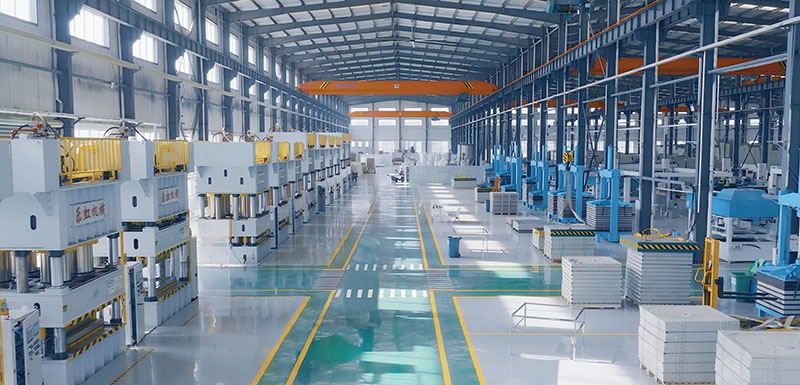
Dazhang provides filter press equipment for industrial wastewater treatment, sludge dewatering, resource recovery, and solid-liquid separation.
Filter press systems can be configured according to material characteristics, processing capacity, solids content, filtration pressure, target cake moisture, and automation requirements.
View Dazhang Chamber Filter Presses or explore our Water & Wastewater applications to learn more about filtration solutions for industrial wastewater projects.