
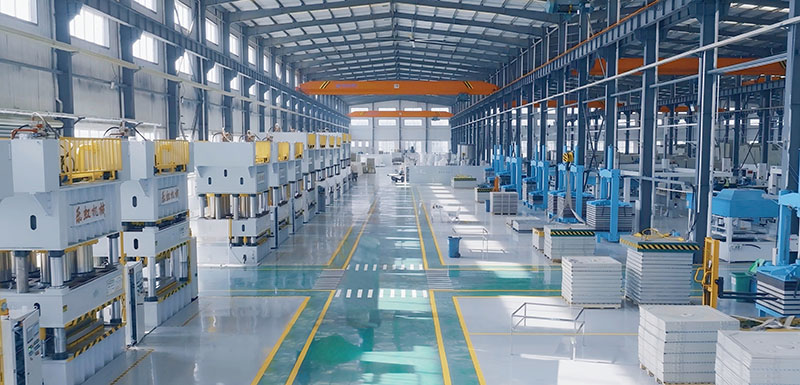
Plate and Frame Filter Press Explained: Working Principle, Benefits, and Applications
When it comes to industrial solid-liquid separation, the plate and frame filter press remains one of the most trusted filtration solutions. Although newer filter press technologies are widely available, plate and frame filter presses continue to be used in many industries due to their simple structure, reliable performance, and cost-effective operation.
In this guide, we'll explain how a plate and frame filter press works, its key advantages, and the industries where it performs best.
What Is a Plate and Frame Filter Press?
A plate and frame filter press is a pressure filtration system that separates solids from liquids using alternating filter plates and filter frames covered with filter cloth.
During operation, slurry is pumped into the filter chambers under pressure. The liquid passes through the filter cloth and exits the system as filtrate, while solid particles are retained inside the chambers to form a filter cake. Once the filtration cycle is complete, the filter plates are opened and the filter cake is removed before the next cycle begins.
If you are comparing different filtration systems, you can also explore our Filter Press solutions to find the most suitable equipment for your application.
How Does a Plate and Frame Filter Press Work?
The filtration process consists of four simple steps:
1. Plate Closing
The hydraulic or manual closing system compresses the filter plates and frames together, creating sealed filter chambers.
2. Slurry Feeding
A feed pump delivers slurry into the filter chambers. As pressure builds, liquid passes through the filter cloth while solids remain inside the chamber.
3. Cake Formation
Solid particles gradually accumulate and form a compact filter cake. As the cake becomes thicker, filtration continues until the chamber is completely filled.
4. Cake Discharge
After filtration is complete, the filter press is opened and the filter cake is discharged. The equipment is then ready for the next filtration cycle.
Advantages of a Plate and Frame Filter Press
A plate and frame filter press offers several important benefits:
-
Excellent filtration accuracy, making it suitable for fine particle separation.
-
Low operating costs thanks to its simple mechanical structure.
-
Easy maintenance, with convenient replacement of filter cloths and filter plates.
-
Flexible operation, allowing different filter cloth materials to be selected based on the slurry characteristics.
-
Reliable performance in batch filtration applications.
For customers seeking higher automation, our Automatic Filter Press offers automatic plate shifting and PLC control to improve productivity.
Typical Applications
Plate and frame filter presses are widely used in industries that require reliable solid-liquid separation, including:
-
Wastewater treatment
-
Chemical processing
-
Mining and mineral processing
-
Food and beverage production
-
Pharmaceutical manufacturing
-
Ceramic and clay processing
-
Pigment and dye production
Different industries require different filter plate materials and filter cloth specifications. Selecting the right configuration helps maximize filtration efficiency and extend equipment service life.
Plate and Frame Filter Press vs Chamber Filter Press
Both types of filter presses are widely used in industrial filtration, but they are designed for different applications.
A plate and frame filter press provides excellent filtration precision and is often preferred for applications requiring filter media flexibility or smaller production batches.
A chamber filter press, on the other hand, uses recessed filter plates to create enclosed chambers, offering faster operation, improved sealing, and easier automation for high-volume production.
If your production requires continuous operation and higher processing capacity, you may also be interested in our Chamber Filter Press products.
Maintenance Tips
Regular maintenance helps ensure long-term performance and reliable operation.
To keep your plate and frame filter press running efficiently:
-
Clean the filter cloth regularly to maintain filtration efficiency.
-
Inspect filter plates for cracks or damage.
-
Check hydraulic components and seals for leaks.
-
Replace worn filter cloths when necessary.
-
Follow the recommended operating pressure to avoid equipment damage.
We also supply a complete range of Filter Cloths, Filter Plates, and other Filter Press Spare Parts to help reduce maintenance downtime.
Conclusion
A plate and frame filter press remains a dependable and economical solution for industrial filtration. Its simple design, reliable operation, and excellent filtration performance make it suitable for a wide range of industries.
Whether you need a standard plate and frame filter press or a customized filtration solution, our experienced team can help you select the right equipment based on your processing requirements.
Browse our complete Filter Press product range or contact us today to discuss your filtration project with our technical specialists.