
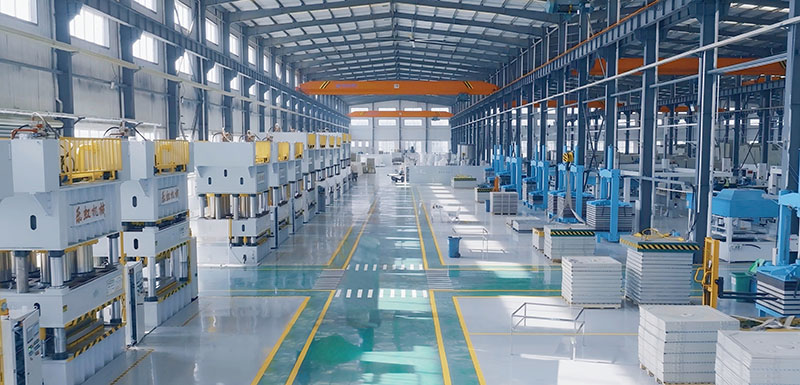
What Is a Plate-and-Frame Filter Press? A Detailed Look at Working Principles, Advantages, and Applications
Solid-liquid separation is a crucial step in industrial production and wastewater treatment processes. Many enterprises prioritize finding ways to efficiently reduce material moisture content and lower downstream processing costs. As a common solid-liquid separation device, the plate-and-frame filter press is widely used in industries such as chemicals, environmental protection, mining, food processing, pharmaceuticals, and metallurgy, thanks to its stable structure, excellent filtration performance, and broad applicability.
This article provides a comprehensive overview of the plate-and-frame filter press, covering its definition, working principles, advantages, application areas, and key selection criteria.
I. What Is a Plate-and-Frame Filter Press?
A plate-and-frame filter press is a mechanical device that achieves solid-liquid separation using filter cloth and pressure. It primarily consists of a frame, filter plates, filter frames, a clamping mechanism, a hydraulic system, filter cloth, and an electrical control system.
During operation, material enters the filtration chambers under pressure; the liquid passes through the filter cloth and is discharged, while solid particles are retained within the chambers, gradually forming a filter cake. After the filtration cycle is complete, the filter plates are opened to discharge the cake, thereby concluding the solid-liquid separation process.
Compared to other filtration equipment, the plate-and-frame filter press offers high filtration pressure, low filter cake moisture content, a simple structure, and easy maintenance. It is particularly well-suited for applications requiring high filtration precision and effective dewatering.
II. Working Principles of the Plate-and-Frame Filter Press
The operation of a plate-and-frame filter press typically involves several stages: clamping, feeding and filtration, pressure maintenance and dewatering, cake discharge, and filter cloth cleaning.
First, the hydraulic system clamps the filter plates and frames together to form sealed filtration chambers. Next, the material is pumped into the chambers. As the feed pressure rises, liquid passes through the filter cloth and exits through the discharge ports, while solid particles are trapped inside the chambers by the filter cloth.
As solid material accumulates within the chambers, a filter cake of a certain thickness forms. Once filtration is complete, the feed stops and the hydraulic system releases the clamping pressure. Operators—or an automatic plate-shifting mechanism—then separate the plates one by one, allowing the filter cakes to fall away under gravity. Finally, depending on operational requirements, the filter cloth can be washed to ensure effective filtration in the next cycle.
The entire process is relatively stable and highly efficient, effectively reducing the moisture content of the material.
III. Key Advantages of Plate-and-Frame Filter Presses
1. Excellent Solid-Liquid Separation
Plate-and-frame filter presses utilize pressure filtration for dewatering; they effectively capture fine solid particles, resulting in clearer filtrate and drier filter cakes. They deliver superior processing results for materials with high solids content, such as sludge, mineral slurries, and chemical slurries.
2. Wide Range of Applications
Filter plates, filter cloths, and sealing structures can be selected from various materials based on the specific properties of the material being processed. This makes the equipment suitable for diverse operating conditions, including acidic or alkaline materials, high-temperature materials, fine-particle materials, and viscous substances.
3. Low Operating Costs
The structure of the plate-and-frame filter press is relatively simple; wear parts are primarily limited to components like filter cloths and seals, making routine maintenance convenient. Compared to some continuous dewatering equipment, it consumes less energy and offers a more cost-effective overall operation.
4. Low Filter Cake Moisture Content
With appropriate feed pressure and filtration cycles, the press produces a dense, compact filter cake, which helps reduce costs associated with subsequent transport, drying, or disposal.
5. High Degree of Customization
Configurations—such as manual, hydraulic, automatic plate shifting, automatic plate flipping, and automatic washing—can be tailored to meet specific production needs based on customer throughput requirements, material characteristics, and on-site conditions.
IV. Application Areas of Plate-and-Frame Filter Presses
Plate-and-frame filter presses are widely used across various industries. Common application scenarios include:
1. Environmental Wastewater Treatment
In the treatment of municipal sewage, industrial wastewater, electroplating wastewater, textile printing and dyeing wastewater, and papermaking wastewater, these presses are frequently used for sludge dewatering. They effectively reduce sludge volume and lower disposal costs.
2. Chemical Industry
Chemical production often involves the filtration and separation of materials such as suspensions, catalysts, pigments, dyes, and resins. Plate-and-frame filter presses can be used to recover solid materials or purify liquid products. 3. Mining and Metallurgy Industry
In processes such as slurry dewatering, tailings treatment, and concentrate filtration, plate-and-frame filter presses can improve solid recovery rates and reduce the moisture content of tailings.
4. Food and Pharmaceutical Industries
In food processing and pharmaceutical manufacturing, plate-and-frame filter presses are used for the filtration and clarification of materials such as syrups, oils and fats, alcoholic beverages, fermentation broths, and traditional Chinese medicine extracts. For applications requiring high hygiene standards, stainless steel components and food-grade filter cloths can be selected.
5. Ceramics and Building Materials Industries
In the treatment of ceramic slurries, stone processing wastewater, and cement slurries, plate-and-frame filter presses facilitate solid-liquid separation, thereby improving resource recovery and utilization rates.
V. How to Choose the Right Plate-and-Frame Filter Press?
When selecting a plate-and-frame filter press, one should not focus solely on the price; instead, a comprehensive assessment based on actual operating conditions is required. The following factors are particularly critical:
1. Material Properties
Different materials vary in particle size, viscosity, pH level, temperature, and solids content; consequently, requirements for filter cloth material, filter plate material, and filtration pressure differ.
2. Throughput Requirements
Enterprises must select appropriate filtration areas and filter chamber volumes based on daily or hourly processing capacities. Insufficient capacity hampers production efficiency, while oversized equipment increases investment costs.
3. Filter Cake Moisture Content Requirements
If low filter cake moisture content is required, equipment capable of higher pressure or equipped with a squeezing function should be selected to enhance dewatering performance.
4. Automation Level
For scenarios involving high labor costs or requirements for continuous production, features such as automatic plate shifting, automatic cleaning, automatic filtrate collection, and automatic plate flipping can be selected to boost production efficiency.
5. Equipment Material and Corrosion Resistance
When handling acidic, alkaline, or corrosive materials, it is essential to choose filter plates with superior corrosion resistance, apply anti-corrosion treatments to the frame, and use compatible filter cloths to extend the equipment's service life.
VI. Daily Maintenance Considerations for Plate-and-Frame Filter Presses
Routine maintenance is crucial for ensuring the long-term, stable operation of the equipment. The following points should be observed during use:
Regularly inspect the filter cloth for damage, clogging, or signs of aging; clean or replace it promptly if any issues are detected. The condition of the filter cloth directly affects filtration speed and filtrate quality.
Check the hydraulic system for proper operation, ensuring stable oil pressure and no oil leaks. The hydraulic system is critical for the clamping and releasing functions of the equipment.
Keep the sealing surfaces of the filter plates clean; residual filter cake can cause material spraying, leakage, or improper clamping.
Regularly inspect the feed pump, piping, valves, and electrical control system to ensure safe and stable equipment operation.
Operate the equipment according to specified pressures and procedures; avoid over-pressurization to prevent equipment damage or safety accidents.
VII. Conclusion
The plate-and-frame filter press is a mature, reliable, and widely used solid-liquid separation device capable of effectively improving filtration efficiency, reducing filter cake moisture content, and lowering downstream processing costs. For enterprises requiring sludge dewatering, slurry filtration, wastewater treatment, or solid recovery, selecting the right plate-and-frame filter press can not only boost production efficiency but also generate more stable economic returns.
When purchasing equipment, it is advisable to conduct a comprehensive assessment based on material characteristics, processing capacity, filtration precision, automation requirements, and site conditions. Furthermore, selecting a manufacturer with extensive experience and robust after-sales service ensures the long-term, stable operation of the equipment.
Categories
What Is a Plate-and-Frame Filter Press?
2026-07-20Dazhang — International Website
Dazhang — Henan
Dazhang — Beijing
Dazhang — Alibaba
Dazhang — German Platform
Copyright © 2013-2026 DaZhangpressfilter All Rights Reserved.