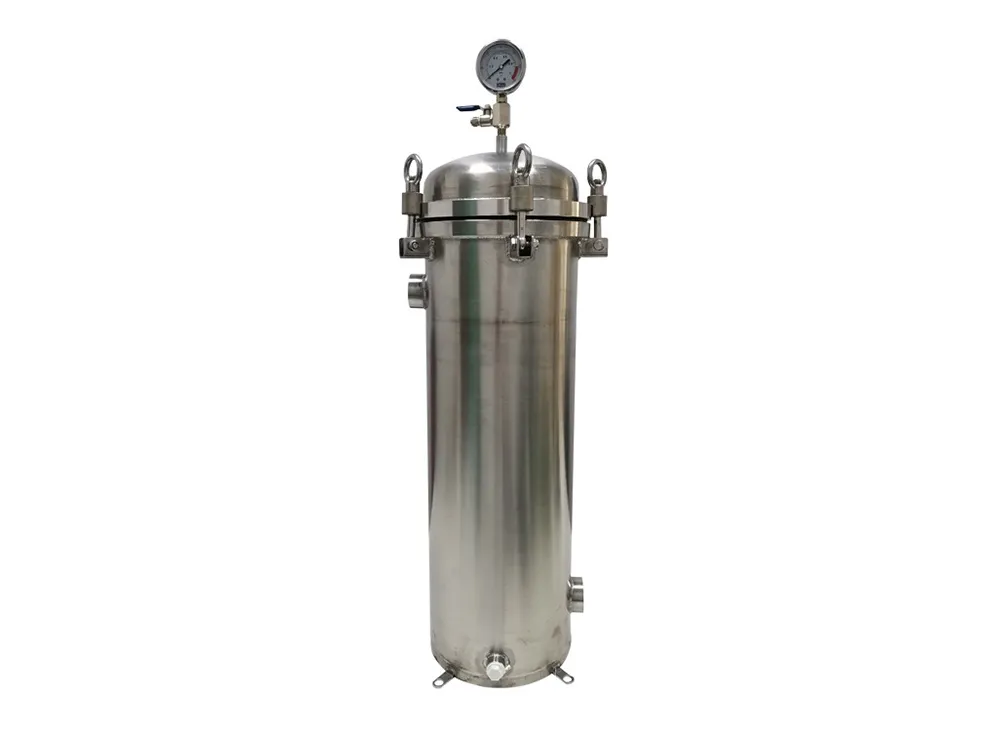
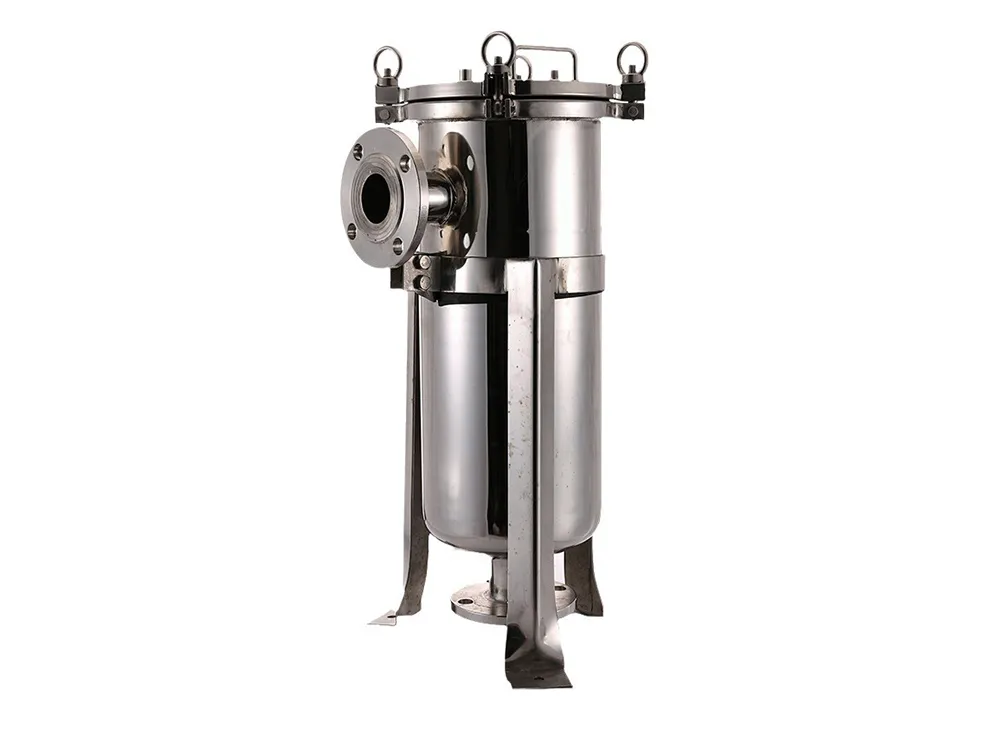
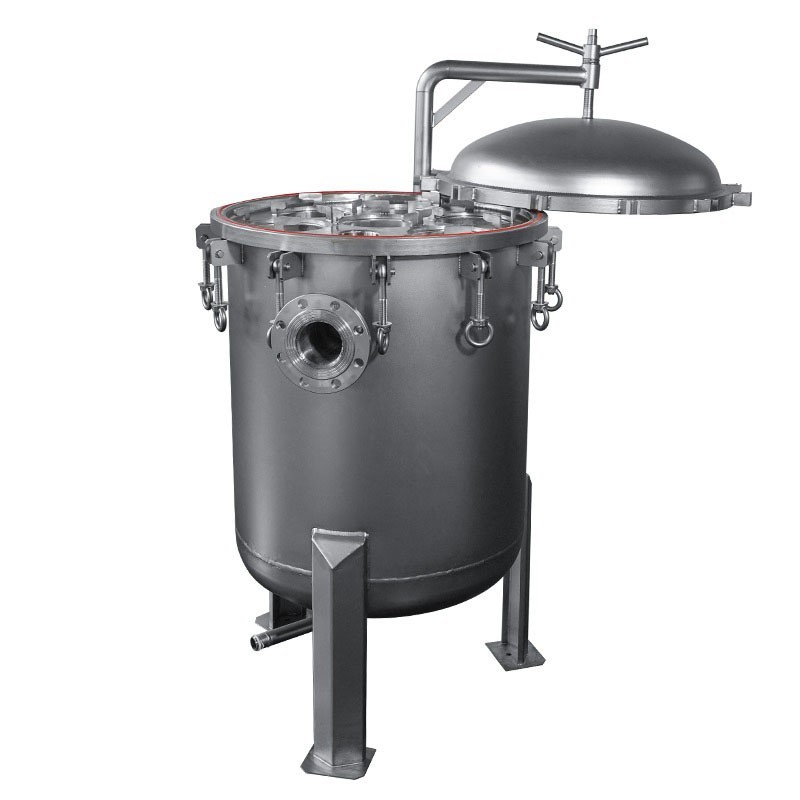
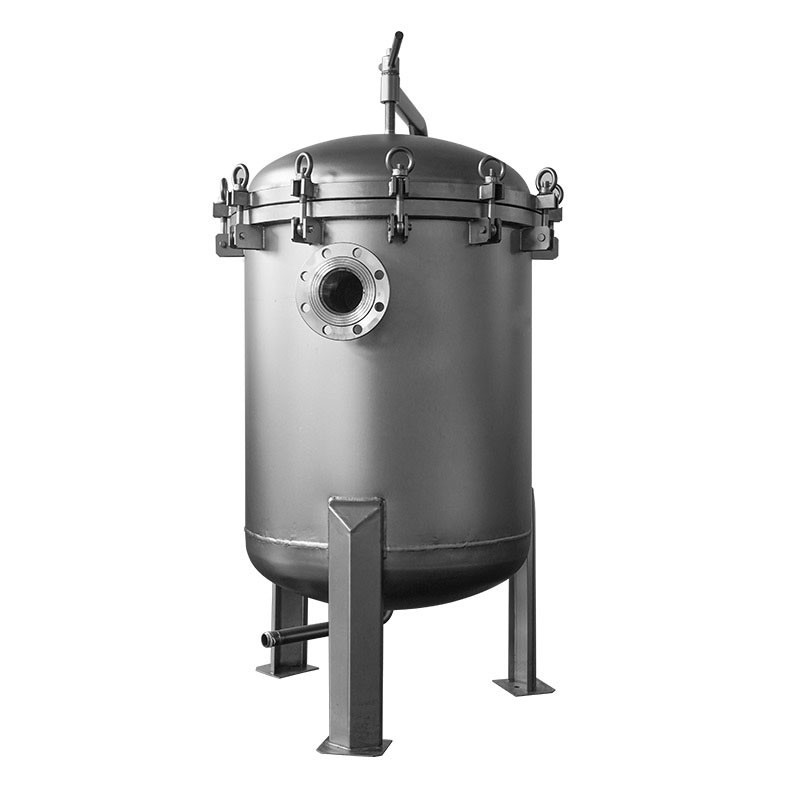
Bag filter
- 2-24
- 70-840
- 0.5
- 1-12
Description
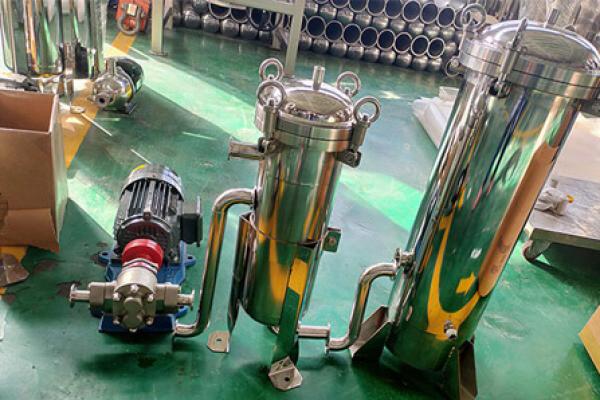
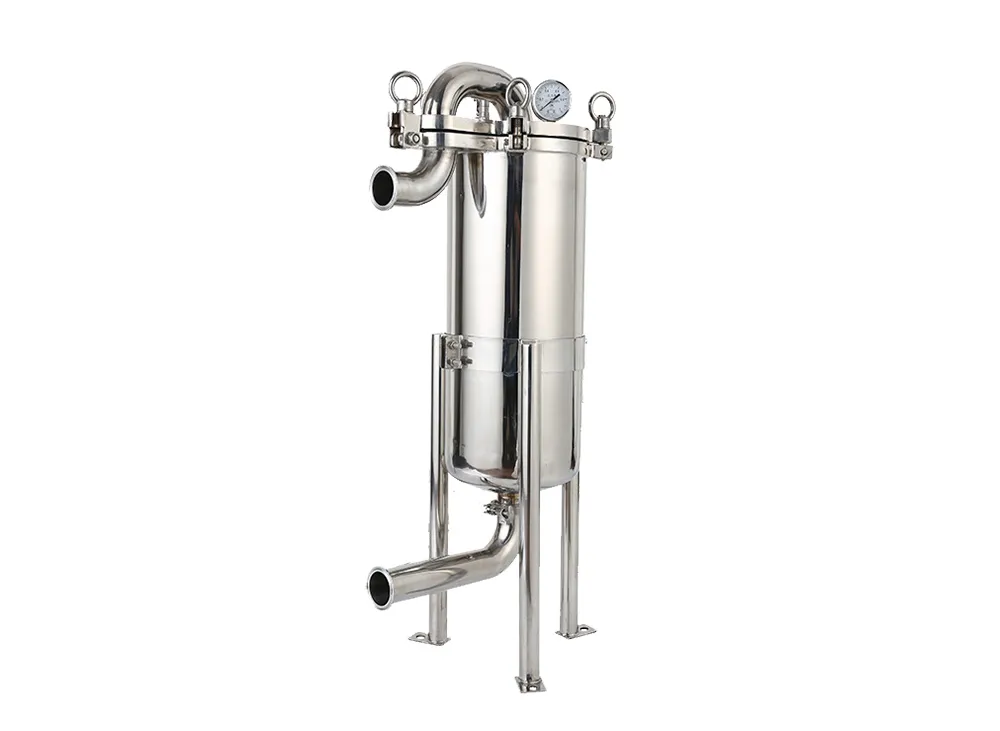
The bag filter is a versatile filtration system characterized by its innovative design, compact size, ease and flexibility of operation, energy efficiency, high performance, leak-tight construction, and wide range of applications.
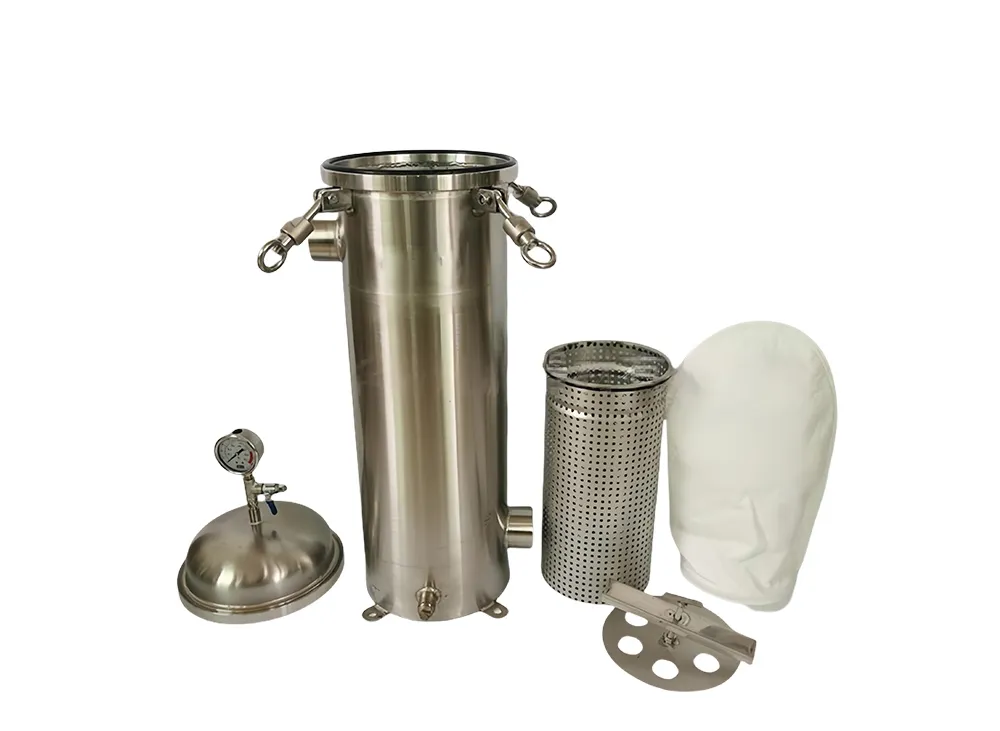
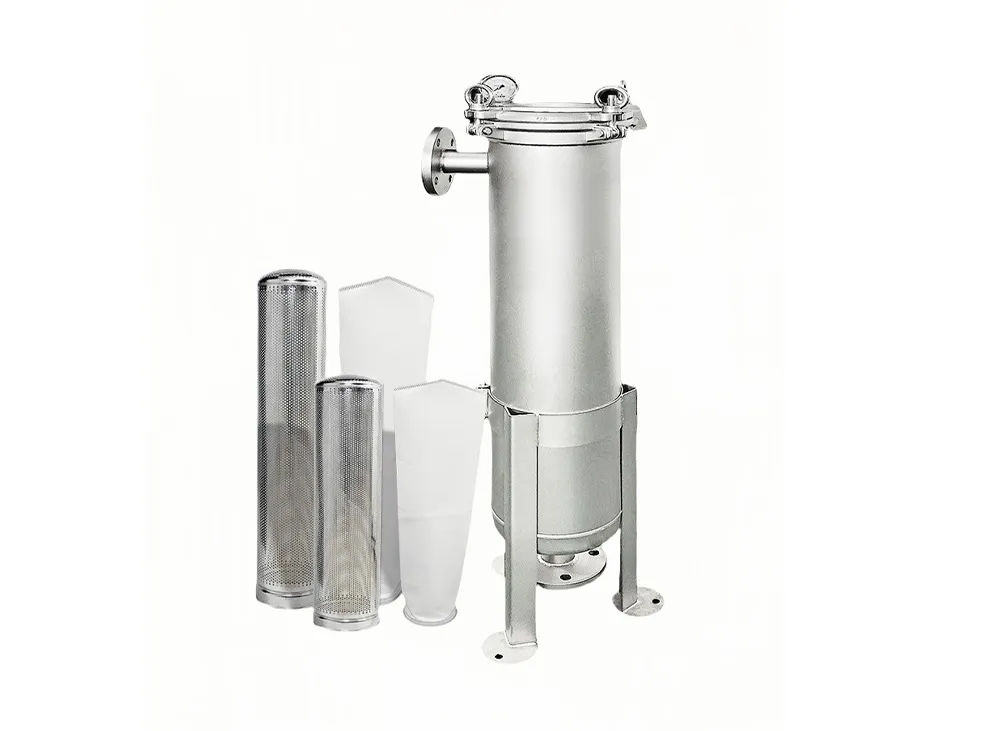
The interior of the bag filter is supported by a metal mesh basket. The liquid enters through the inlet and flows out through the outlet after being filtered through the filter bag. Impurities are trapped in the filter bag, and after replacing the bag, the filter can be used in continuous operation.
The following types of bag filters are available: single-bag filter, multi-bag filter, swinging bag filter, high-precision bag filter, etc., with a filtration accuracy of 1–10 microns.
Technical Specifications
| Models | Number of filter bags | Filter area (m²) | Flow rate (m³/h) | Inlet/outlet connections | Maximum pressure (MPa) | Housing diameter (mm) | Overall height (mm) | Housing height (mm) |
|---|---|---|---|---|---|---|---|---|
| DL-2P2S | 2 | 1 | 70 | DN50 | 0.5 | 456 | 1572 | 1144 |
| DL-3P2S | 3 | 1.5 | 105 | DN80 | 0.5 | 508 | 1592 | 1190 |
| DL-4P2S | 4 | 2 | 140 | DN100 | 0.5 | 558 | 1632 | 1244 |
| DL-5P2S | 5 | 2.5 | 175 | DN150 | 0.5 | 608 | 1788 | 1254 |
| DL-6P2S | 6 | 3 | 210 | DN150 | 0.5 | 658 | 1854 | 1300 |
| DL-7P2S | 7 | 3.5 | 215 | DN150 | 0.5 | 710 | 1875 | 1340 |
| DL-8P2S | 8 | 4 | 280 | DN150 | 0.5 | 760 | 1922 | 1404 |
| DL-10P2S | 10 | 5 | 350 | DN200 | 0.5 | 910 | 2004 | 1430 |
| DL-12P2S | 12 | 6 | 420 | DN200 | 0.5 | 962 | 2064 | 1460 |
| DL-14P2S | 14 | 7 | 490 | DN200 | 0.5 | 1012 | 2124 | 1490 |
| DL-16P2S | 16 | 8 | 560 | DN250 | 0.5 | 1112 | 2146 | 1512 |
| DL-18P2S | 18 | 9 | 630 | DN250 | 0.5 | 1162 | 2225 | 1595 |
| DL-20P2S | 20 | 10 | 700 | DN250 | 0.5 | 1212 | 2280 | 1640 |
| DL-22P2S | 22 | 11 | 770 | DN250 | 0.5 | 1366 | 2320 | 1694 |
| DL-24P2S | 24 | 12 | 840 | DN300 | 0.5 | 1416 | 2358 | 1748 |
Features
- The bag filter is characterized by high performance, compact dimensions, and high wastewater flow capacity;
- Replacing the filter bag is quick and convenient, and the filter does not require cleaning, which saves time and labor;
- The filter bag can be reused after cleaning, which helps reduce costs;
- The filtration accuracy of the filter bag is constantly improving and reaches 0.5 microns;
- The filter bag has a low level of side leakage, which effectively ensures filtration quality;
- The bag filter withstands higher operating pressures, has low pressure drop, low operating costs, and provides significant energy savings;
- The bag filter has a wide range of applications, flexibility in use, and various installation methods. It can be moved using small carts.
Design and Operating Principle
The bag filter is a pressure-type filtration device that primarily consists of a filter housing, a filter housing cover, a stainless steel filter bag reinforcement mesh, and other main components. The filtrate enters the filter bag through the side inlet pipe of the filter housing. The filter bag itself is installed in a basket made of reinforcing mesh. High-quality filtrate is obtained when the liquid passes through the filter bag with the required degree of purification, while impurity particles are retained by the filter bag. Replacing the filter bag is very convenient. There is virtually no material loss during filtration.
Applications
- Pharmaceutical industry: catalyst regeneration, activated carbon removal, regeneration of expensive active raw materials, protein removal from plasma, hormone filtration, vitamin complex filtration, filtration of solutions for pH regulation, filtration of plant extract solutions, filtration of pharmaceutical syrups, pre-filtration of crystalline solutions, and filtration of cough medicines.
- Water purification: removal of impurities from mineral water; raw water filtration; filtering impurities in cooling systems; removing scale or deposits in water supply systems; chemicals used for wastewater filtration; pre-treatment for reverse osmosis membranes.
- Metalworking industry: hydraulic oil filtration; circulating coolant filtration; recovery of precious metals (aluminum, silver, platinum); filtration of workpiece phosphating fluid; filtration of anti-corrosion oil; filtration of oil for ultra-fine grinding; removal of oil from coolant and cleaning fluid.
- Resins, paints, coatings, adhesives, and other coatings: filtration of electrophoretic paints; filtration of spray water, filtration of varnishes and finishing materials; removal of suspended agglomerates; removal of filler from ball mills; removal of gel from acrylic adhesive; removal of resins and crystals; removal of agglomerates from adhesive coatings; filtration of hot-melt polymer; removal of PVA agglomerates; filtration during degreasing; filtration of phosphating solution; filtration of metallic pigments.
- Electronics industry: filtration of cooling water; removal of zinc precipitates from zinc solution; removal of impurities in the stabilization tank for electrolytic copper foil; filtration of wastewater from chip grinding.
Related Products
Related Cases